
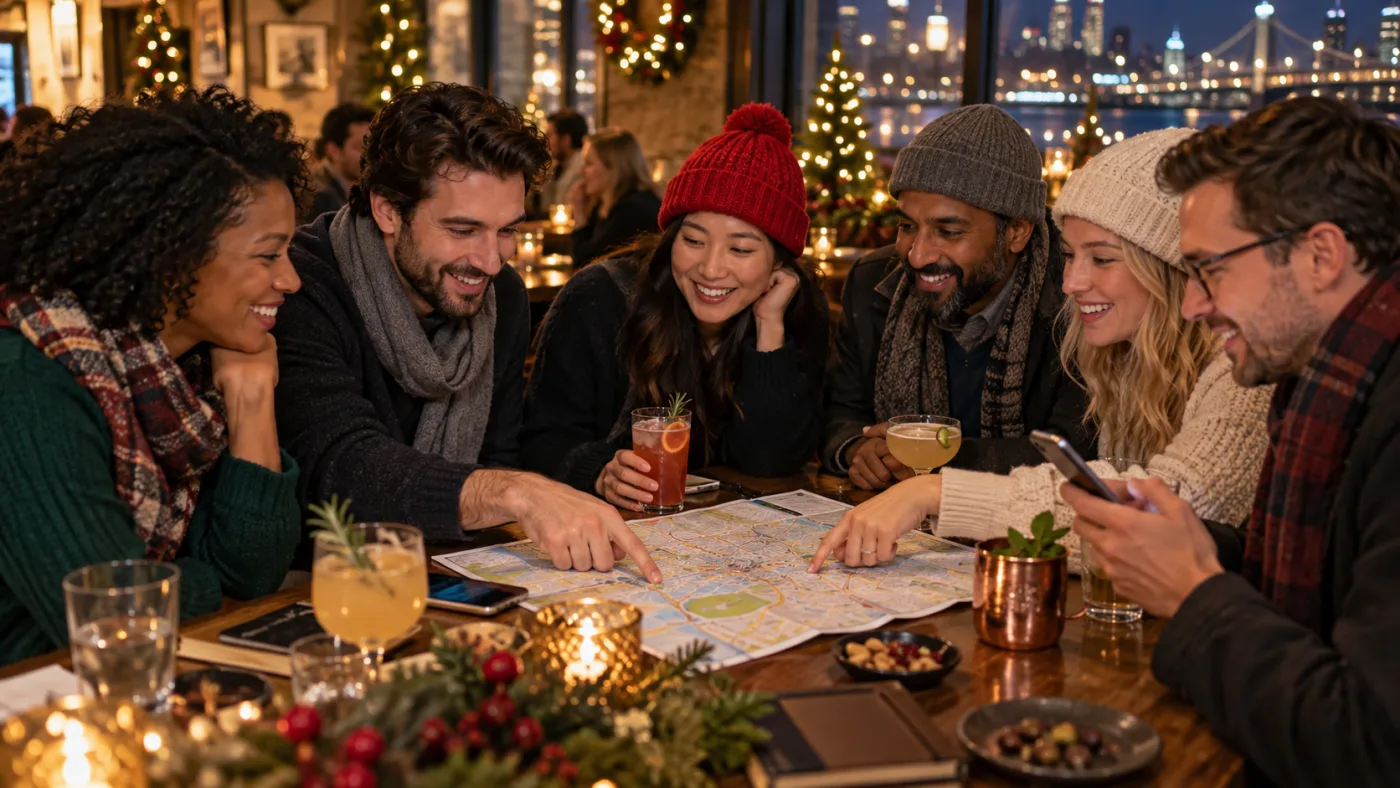

A holiday bar outing works best when the group agrees on the experience before anyone buys a ticket. Decide whether you want one immersive venue, a casual decorated bar or a multi-stop crawl; then confirm budget, age restrictions, sober options and the last safe trip home. The organizer’s most valuable job is not building the longest itinerary. It is removing the two or three uncertainties most likely to split the group or create a rushed evening.
Choose the format before the venue
A ticketed pop-up usually offers a defined session, controlled capacity and elaborate décor, but it may limit arrival time and spontaneous additions. A permanent themed bar is more flexible, though December queues can be unpredictable. A crawl offers variety but adds walking, weather and coordination. Ask the group to rank atmosphere, cocktails, food, photo opportunities, dancing and conversation. The highest shared priority should determine the format. A quiet dinner group will not be rescued by spectacular décor if the room is built around loud music and timed entry.
Build one honest per-person budget
Count admission, service charges, expected drinks or mocktails, food, transit, coat check and a contingency. Do not describe an included welcome drink as making the rest of the night “free.” For a worked example, a $24 ticket with a $5 fee, two $15 drinks, $22 food and $18 round-trip transit is a $99 evening before tax and gratuity. Someone choosing one mocktail and sharing food may spend less; a rideshare surge can push the total higher. Share a range rather than one optimistic number, and make the ticket deadline clear.
Confirm access and age rules for the exact session
A venue can allow families during brunch and require 21+ identification at night. Check the selected date and time rather than relying on a homepage description. Ask about stairs, seating, accessible restrooms and sensory intensity when they matter to the group. Timed experiences may expect everyone to enter together, so clarify what happens if a guest is late. If one person cannot meet a rule, choose another session before the group pays; solving it at the door is the most expensive option.
Plan drinks without assuming everyone drinks alcohol
A good plan makes nonalcoholic choices normal. Look for a current menu or contact the venue to confirm at least one considered mocktail, alcohol-free beer or warm drink beyond soda. Decide who is driving, using transit or booking a ride before the first round. Avoid itineraries that require driving between drinking stops. For crawls, identify a meal stop and a natural exit point so nobody feels obligated to finish every venue. Practical pacing is part of the experience, not a lecture added afterward.
Use a two-anchor itinerary
Choose one hard anchor—the reservation or ticket time—and one soft anchor, such as dinner nearby. Everything else is optional. For an 8 p.m. pop-up, a workable plan could be a 6:15 p.m. meal within a ten-minute walk, arrival at 7:40, the scheduled experience, and one optional final stop near the return transit line. This leaves time for a slow check, winter sidewalks and coat handling. Three reservations in one night create pressure without adding much value.
Write the message people actually need
Send one message with the exact venue address, arrival target, ID requirement, ticket ownership, estimated spend, dress/weather note, transit plan and cancellation terms. Include the official event link, not only a screenshot. Ask for accessibility or food concerns privately. On the day, resend only changes. A large group chat becomes unreliable when important facts are buried under outfit photos and jokes, so keep the operational message compact and pinned.
Weather, clothing and the last safe trip home
Winter planning is part of the venue choice. Check the walking surface and distance between transit, dinner and the event; a ten-minute route can feel very different in rain, snow or dress shoes. Use layers that can be checked or carried without blocking a crowded table, and confirm whether the venue has a coat check. Save the final train or bus time and one backup ride option before departure. If severe weather makes the route unsafe, the cancellation terms and ticket-transfer rules you reviewed earlier determine the least costly decision. A festive plan is successful only when every guest can get home without pressure to drive after drinking.
Our judgment
For groups of six or more, certainty beats novelty. We prefer one verified anchor venue with enough time to enjoy it over a “perfect” multi-stop plan that depends on short queues and synchronized rideshares. A flexible decorated bar can be a better choice than a ticketed pop-up when the guest list is still changing. The right format is the one that fits the group’s budget and mobility, not the one with the biggest installation.
Sources and review notes
Sources were reviewed on September 26, 2026. External event details can change; use the linked operator or venue for transactions.